
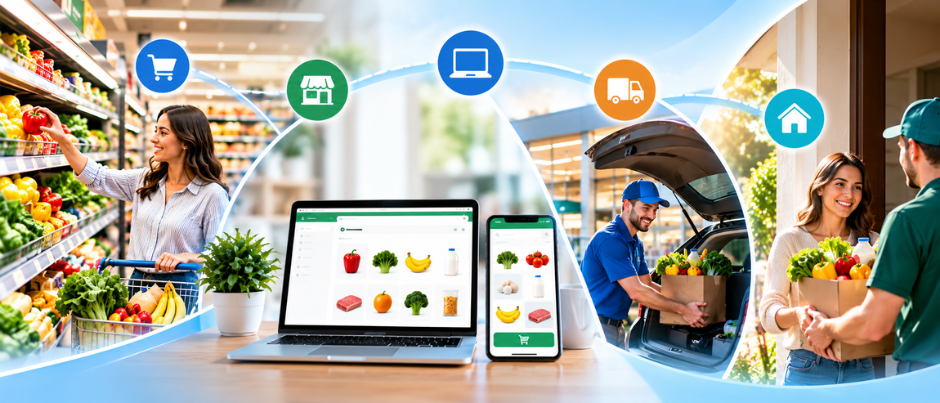
Today’s grocery shoppers expect convenience, flexibility, and consistency throughout their shopping journey. They may browse products online, check weekly promotions on a mobile app, place an order for pickup, and later visit the store to grab a few extra items. Customers no longer think in terms of separate shopping channels. They simply expect every interaction with a retailer to work together seamlessly.
For independent grocery retailers, meeting these expectations is becoming essential for staying competitive. While larger chains have invested heavily in digital shopping experiences, independent grocers have an opportunity to strengthen customer relationships by creating connected experiences that combine both physical stores and digital channels, without needing an enterprise sized budget to do it.
This is where omnichannel retail plays an important role. This article covers what omnichannel retail means, how it differs from multichannel retail, why it matters for independent grocers, the common challenges retailers run into, and practical strategies for building an omnichannel experience that fits a smaller operation.
What is Omnichannel Retail?
Omnichannel retail is a strategy that connects every shopping channel into one seamless customer experience. Whether a shopper is in the store, browsing online, using a mobile app, redeeming a digital coupon, or picking up a curbside order, every interaction is connected through shared customer data.
Unlike multichannel retail, where each channel often operates independently, omnichannel retail makes sure those channels work together. Customer information, purchase history, promotions, and loyalty rewards stay consistent no matter how a shopper chooses to interact with the store.
The goal is simple: make shopping easier while creating a more personalized, convenient experience.
Omnichannel Retail vs. Multichannel Retail
| Multichannel Retail | Omnichannel Retail |
| Channels operate independently | Channels work together seamlessly |
| Customer data remains separate | Customer data is unified across channels |
| Experience varies by platform | Consistent shopping experience everywhere |
| Promotions may vary by channel | Personalized offers stay consistent |
| Limited visibility into customer behavior | Complete view of the customer journey |
Most independent grocers already have pieces of a multichannel setup in place. Moving toward true omnichannel retail means connecting those existing pieces rather than starting from scratch.
Why Omnichannel Retail Matters
Shopping habits have changed significantly over the past several years. Many shoppers now begin their purchasing journey online, browsing the weekly ad, building a list, or comparing prices, before ever setting foot in the store.
When these digital experiences are disconnected from the in store visit, shoppers notice. Imagine a shopper who adds items to an online cart, then visits the physical store later that day. If their loyalty rewards, digital coupons, and purchase history aren’t recognized in store, the experience feels inconsistent, and that friction pushes loyal shoppers toward competitors who make things easier.
For independent grocery retailers, closing that gap leads to several real benefits:
- Better customer convenience
- Stronger customer loyalty
- Increased store sales
- Higher customer satisfaction
- More personalized marketing
- Better use of customer data
Rather than competing on price alone, retailers compete by delivering a better overall shopping experience.
Common Challenges Independent Grocers Face
Building a connected shopping experience comes with real hurdles, especially for smaller operations working with limited resources and systems that weren’t originally designed to work together.
- Customer data spread across different platforms
- Inconsistent pricing or promotions between online and in store channels
- Limited inventory visibility across the store
- Disconnected loyalty programs
- Difficulty delivering personalization at scale
These challenges are common, but they’re solvable. Even small improvements in connectivity, like linking a loyalty program to an online ordering platform, can meaningfully improve the shopping experience.
How Independent Grocers Can Build a Successful Omnichannel Strategy
Success doesn’t require matching the technology budgets of national chains. It comes from connecting the tools and channels independent grocers already have.
Connect Customer Data
Loyalty programs, point of sale systems, ecommerce platforms, and digital coupons should all feed into one complete customer profile. When that data is unified, retailers gain a clearer picture of shopping habits and can deliver more relevant experiences across every channel.
Deliver Consistent Promotions
If a digital coupon is available through the mobile app, it should also work at the register. Consistent promotions build trust and encourage shoppers to engage across multiple channels instead of sticking to just one.
Offer Flexible Shopping Options
Online ordering, curbside pickup, home delivery, and traditional in store shopping each serve a different shopper preference. Offering that flexibility helps independent grocers reach more customers while increasing overall store sales.
Personalize the Shopping Experience
A shopper who regularly buys coffee is far more likely to redeem a personalized coffee promotion than respond to a generic storewide discount. Using customer insights to recommend relevant products and targeted offers, instead of blanket discounts, improves engagement and encourages repeat visits.
The Role of Retail Analytics in Omnichannel Success
An effective omnichannel strategy depends on more than simply offering multiple ways to shop. Retailers also need to understand how shoppers move between those channels.
By analyzing behavior across online and in store interactions, retailers can identify shopping patterns, measure promotion performance, and understand which channels drive the most engagement. For example, if analytics shows that shoppers frequently browse a product online before buying it in store, retailers can make sure that product stays well stocked while delivering promotions that encourage the store visit.
Rather than treating each channel separately, retail analytics gives independent grocers a complete view of the customer journey to guide decisions on promotions, staffing, and inventory.
Future Trends in Omnichannel Retail
Customer expectations will keep evolving as technology advances. Independent grocers that invest in connected experiences today will be better positioned to meet tomorrow’s shopper expectations. Trends shaping the space include:
- AI powered product recommendations and personalized offers
- Digital coupons that work seamlessly across all shopping channels
- Mobile apps with integrated loyalty rewards
- Real time inventory visibility
- Faster curbside pickup and delivery
- More personalized engagement using consumer insights
As these tools become more accessible, independent grocers have a real opportunity to deliver the same connected experience customers expect from larger retailers, while keeping the personalized service that sets them apart.
How RSA America Helps Independent Grocers Succeed
Building a successful omnichannel strategy requires more than offering multiple shopping channels. It requires connecting customer data, store operations, loyalty programs, and digital commerce into one unified view.
RSA America helps independent grocery retailers do exactly that by bringing together data from POS systems, loyalty programs, ecommerce platforms, and customer interactions into a single view. This makes it easier to understand shopper behavior, deliver personalized promotions, and make smarter business decisions using retail analytics, all without adding complexity to day to day operations.
Bringing Omnichannel Retail Together
Today’s shoppers expect their experience to be simple, convenient, and connected, no matter where they interact with a retailer. Omnichannel retail lets independent grocers meet that expectation by creating seamless experiences across in store, online, and mobile channels.
Success isn’t about adding more technology. It’s about using the technology already available to better understand shoppers, connect every touchpoint, and build experiences that keep customers coming back. Retailers that invest in omnichannel strategy today are better positioned to grow customer loyalty, improve operational efficiency, and drive sustainable store growth.
Frequently Asked Questions
-
Why is omnichannel retail important for independent grocery retailers?
It creates a consistent shopping experience across physical and digital channels, helping retailers improve customer satisfaction, increase loyalty, and grow overall store sales.
-
Is omnichannel retail affordable for a small independent grocery store?
Yes. Independent grocers don’t need enterprise level systems to start. Connecting an existing loyalty program with online ordering is often a practical first step.
-
How does retail analytics support an omnichannel strategy?
It helps retailers understand shopper behavior across every channel, measure promotion performance, and make data driven decisions that improve the overall experience.
-
Does buy online, pick up in store count as omnichannel retail?
It’s one component of it. True omnichannel goes further by keeping pricing, promotions, and loyalty data consistent across that pickup experience and the rest of the store.
-
How can independent grocers get started with omnichannel retail?
Most see the biggest early impact from connecting their loyalty program with POS and ecommerce systems, then layering in consistent promotions and analytics from there.